From Dieter Schlüter's breakthrough Cobra in 1970 to the open-source RotorFlight revolution of today — a compiled, collaborative AI chronicle between Gemini and Claude of the people, machines, and technologies that built one of the world's most technical and demanding hobbies - Review & Corrections are a work in progress (6/24/2026)
Before a single RC helicopter successfully flew for public demonstration, a decade of experiments, patents, and near-misses laid the engineering groundwork. Tethered machines, unstable prototypes, and a handful of determined engineers defined this era.
In October 1949, the company that would become Hirobo Limited is founded in Hiroshima, Japan, as a textile machinery manufacturer. It changes its name to Hirobo Limited in 1970, establishes an electronics division in April 1973, and launches RC model production that July. By October 1977, it has fully abandoned textiles. The precision manufacturing culture established in these early decades ultimately makes it one of the most important RC helicopter companies in history.
Throughout the 1950s and 1960s, engineers in Europe, Japan, and the US attempt to build radio-controlled helicopters. Most are tethered to prevent runaway flight, highly unstable, or not commercially available. The fundamental challenge: unlike a fixed-wing aircraft, a helicopter has no passive aerodynamic stability and requires constant active input to hover. Available AM radio equipment (limited channels, poor resolution) makes this essentially unmanageable. The problem awaits a breakthrough solution.
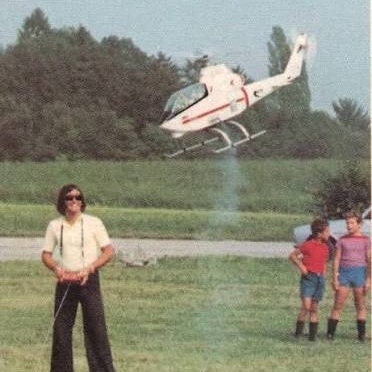
German automotive engineer Dieter Schlüter spends years in his spare time solving the core engineering challenges of RC helicopter control — primarily the swashplate mechanism for cyclic pitch and the pitch-controlled tail rotor for torque compensation. When his breakthrough arrives, it will be total rather than incremental. His solution will remain the architectural basis for virtually every RC helicopter built since.
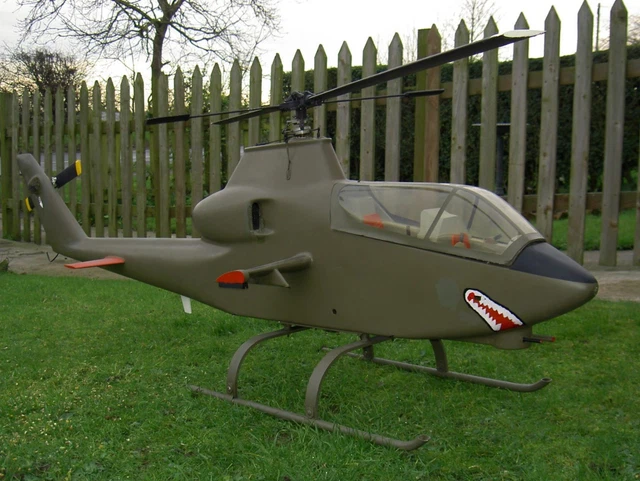
Dieter Schlüter's 1970 Cobra changed everything. Within a decade, the hobby spread from Germany to Japan, the UK, and the US, competitions were established, and the first global manufacturing industry took shape around a machine most people had never imagined flying.
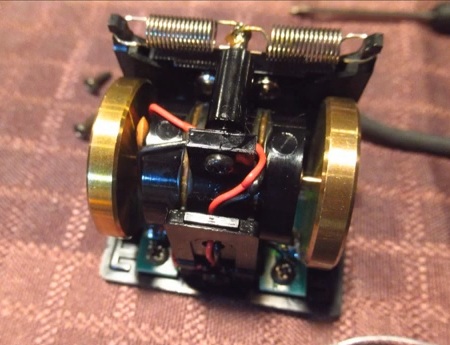
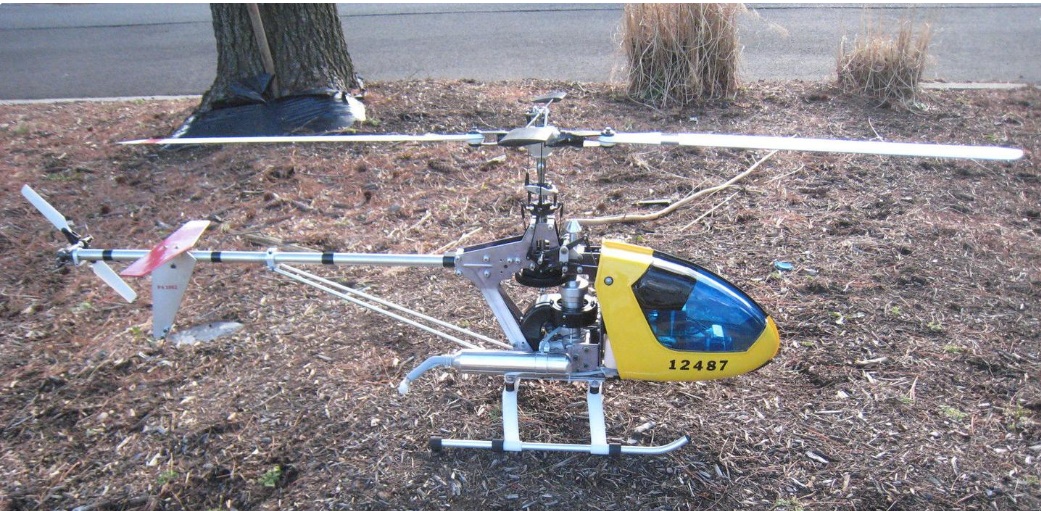
Dieter Schlüter — recognized as the "Father of the RC Helicopter" — debuts the Schlüter Cobra, the world's first successful, commercially viable, & fully controllable radio-controlled model helicopter. This single breakthrough revolutionizes the hobby & spawns a global industry. The Cobra incorporates a gear-driven rotor system, a swashplate for cyclic pitch control, and a pitch-controlled tail rotor for torque compensation — the same fundamental architecture RC helicopters use to this day. Released as a kit in Europe through Schuco-Hegi. Kalt Sangyo of Japan licenses Schlüter's design and launches their first helicopter, the Kalt Huey Cobra.
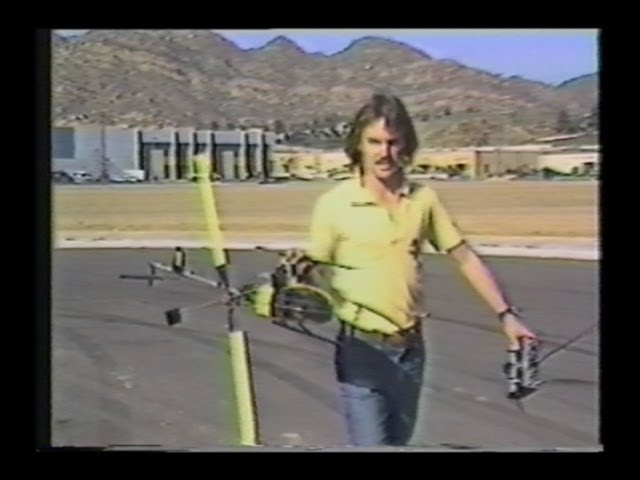
Schlüter sets world records for RC helicopter endurance and distance. Kalt Sangyo of Japan launches the Cobra 450, marking Japan's entry into RC helicopter manufacturing — the beginning of a dominance that will last decades. Schlüter's designs are demonstrated in the United States for the first time, generating enormous enthusiasm.
The first US Nationals helicopter competition is held, formalizing competitive RC helicopter flying as a sport. Schlüter's Cobra is publicly demonstrated in the UK. Dub-Ro releases the Whirlybird 505, one of the earliest US-designed RC helicopter kits. The hobby begins to grow internationally beyond Schlüter's home market.
Kavan releases the first commercially available production gyro for RC helicopters — a crucial step toward manageable tail control for average pilots. Micro-Mold releases the Lark, an affordable pod-and-boom trainer broadening market access. The first RC helicopter is controlled from inside a full-size aircraft; the first cross-channel (English Channel) RC helicopter flight is completed.
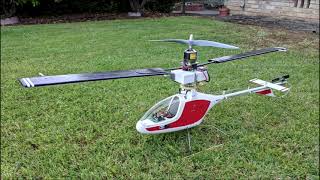
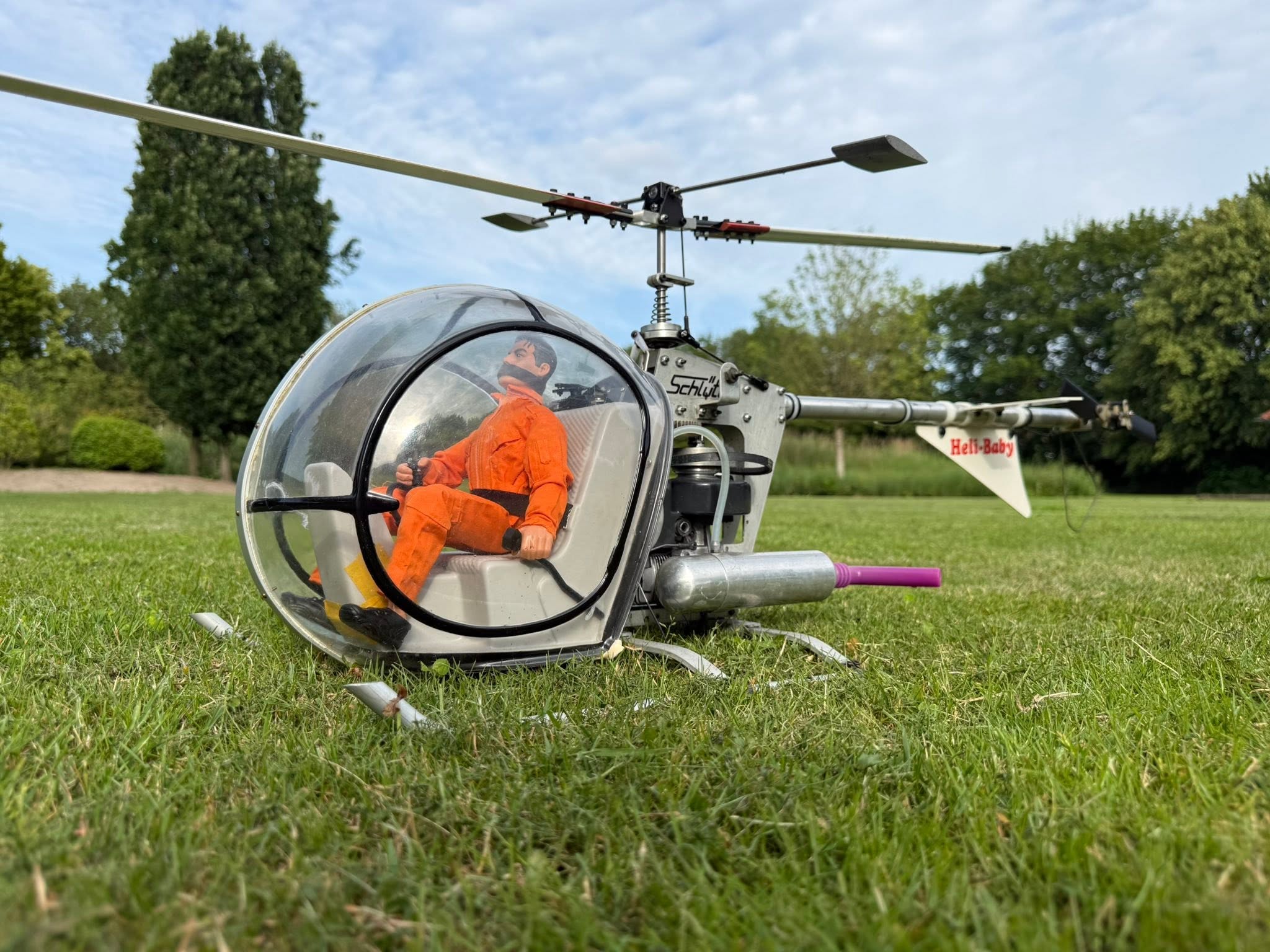
Introduction of the Heli-Baby establishes the standard pod-and-boom helicopter layout that will dominate trainer design for decades. Graupner releases the Bell 47 with plastic construction. The accessible pod-and-boom design makes helicopters cheaper to build and repair, driving broader adoption of the hobby across Europe and Japan.
By October 1977, Hirobo Limited has completely exited the textile business. They immediately mark their full commitment to RC with the release of five new helicopter models — the largest single-year release by any manufacturer to that date. This begins Hirobo's rise into the top tier of RC helicopter manufacturers, a position they will hold for decades.
American RC Inc. introduces a rigid-rotor (flybarless) machine — the first attempt at electronic stabilization of an RC helicopter, a remarkable 30-year preview of the FBL revolution to come. The electronics of 1978 cannot realize its full potential, but the concept is established. Meanwhile, Schlüter's Heli-Boy / Bell 222 dominates competitions; it wins nearly everything. Miniature Aircraft USA is founded to import Schlüter models to American pilots. Aftermarket fuselage bodies become widely available. Thunder Tiger Corporation is also founded in Taiwan this year, beginning a journey that will make it one of the world's most important RC helicopter companies.
The first commercial untethered electric RC helicopter appears. Multi-blade heads become commercially available. Japanese companies accelerate global expansion. Futaba releases an advanced FM radio system with built-in helicopter mixing functions — a major usability step. Most significantly: the first true continuous inverted flight (non-switched) is achieved. The era of 3D flight has its conceptual birth. John Gorham, an aviation systems engineer who worked on the Lockheed L-1011 autopilot, takes up the RC helicopter hobby this year — setting in motion the founding of GMP.
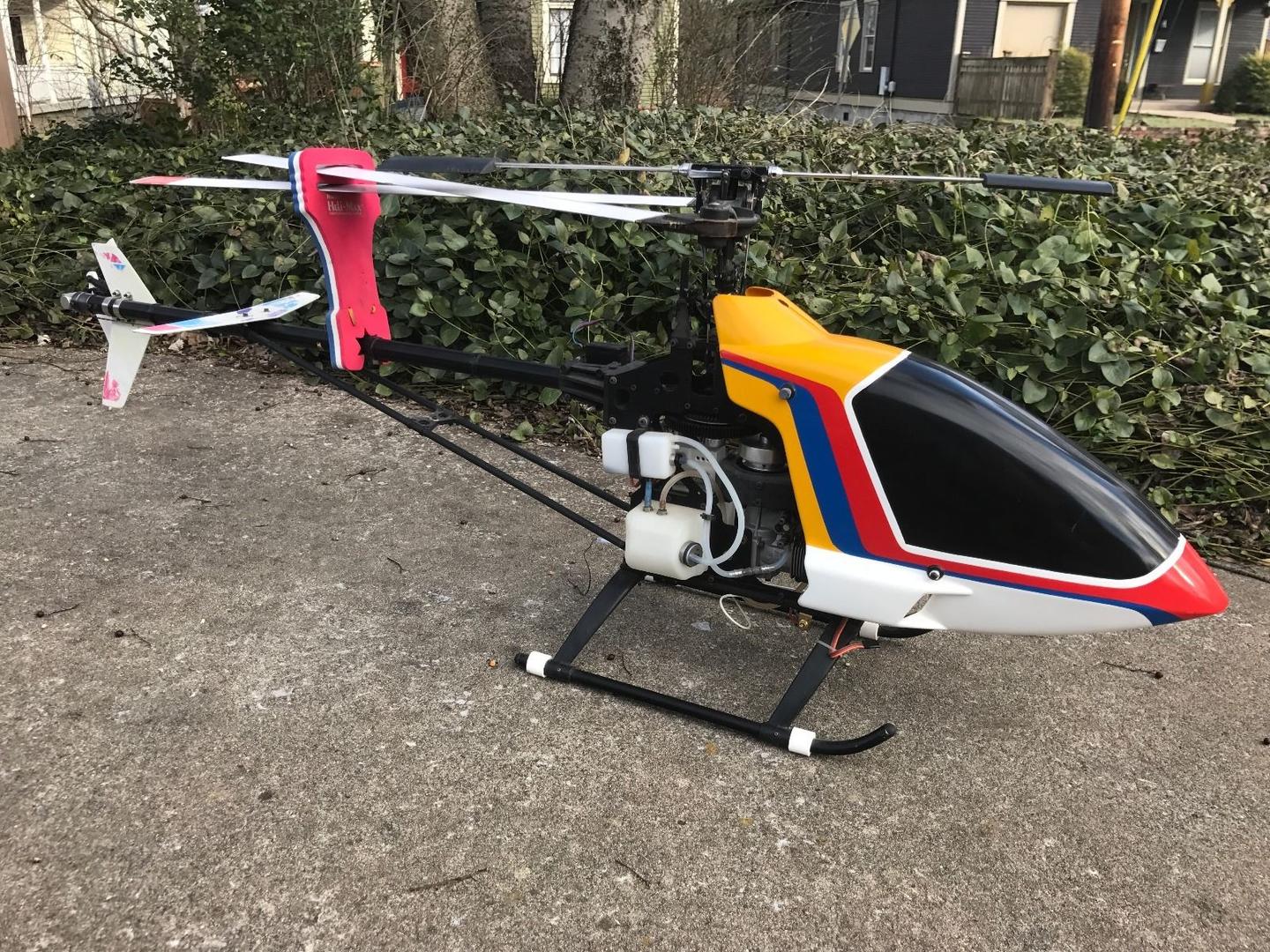
The 1980s saw RC helicopters explode from niche hobby to competitive sport. GMP became America's largest manufacturer. Rob Gorham, Curtis Youngblood, and Wayne Mann pushed 3D to new extremes. The Hirobo Shuttle defined the ARF trainer. And Schlüter's Robbe partnership brought professional-grade machines to the masses.
John Gorham designs six original "Cricket" model helicopters for the 1981 Universal Pictures film All Night Long. Retaining the tooling rights, he and his family showcase the Cricket at the Long Beach Hobby Show, taking hundreds of orders on the spot. Gorham Model Products (GMP) is founded. They will go on to manufacture roughly 16,000 Cricket kits and become the largest RC helicopter manufacturer in the United States. That same year, Rob Gorham — John's son — wins his first US National Championship (NATS), beginning an extraordinary competitive career.
GMP releases the Competitor, a heavy-duty aerobatic model featuring top-cone engine starting and sophisticated mechanics previously reserved for professional setups. It brings serious 3D capabilities to standard consumers for the first time. Rob Gorham wins his second US National Championship and begins his career as a paid factory pilot for Futaba, Hirobo, and TSK, promoting the hobby globally with high-difficulty inverted demonstrations.
Schlüter partners with German modeling company Robbe. Models including the Junior 50, Scout 60, and the premium Magic are developed and co-marketed under the Robbe-Schlüter name. These machines transition RC helicopters from basic kits to highly precise aerobatic and scale machines. Schlüter's scale designs (Bell 222, Hughes 500, AS355 Twin Star) bring full-size helicopter aesthetics to the hobby. Many of Schlüter's rotor head and flybar designs become the mechanical lineage of modern 3D and scale machines.
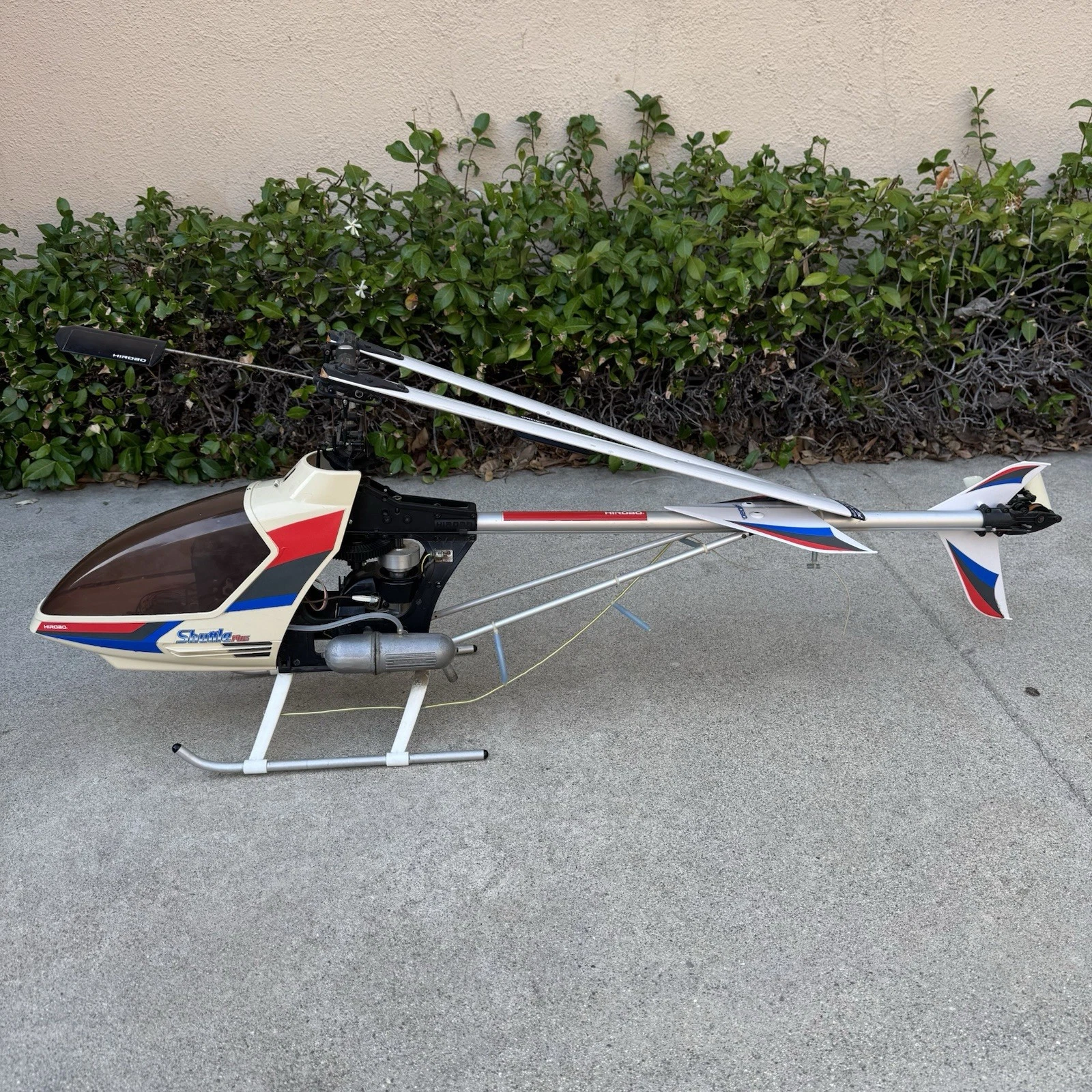
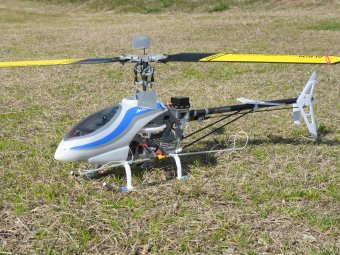
In August 1985, Hirobo introduces the Shuttle in ARF (Almost Ready to Fly) form — not the first ARF, but the first at such a level of completion that only radio gear and skids remain to fit. The Shuttle includes an autorotation clutch as standard, giving aerobatic capability to a machine positioned as a trainer. Even 25 years later the Shuttle (through the ZXX, ZTS, and Challenge variants) remains one of the best learner helicopters ever made. Rob Gorham wins his third and final NATS championship this same year, flying the GMP Cobra.
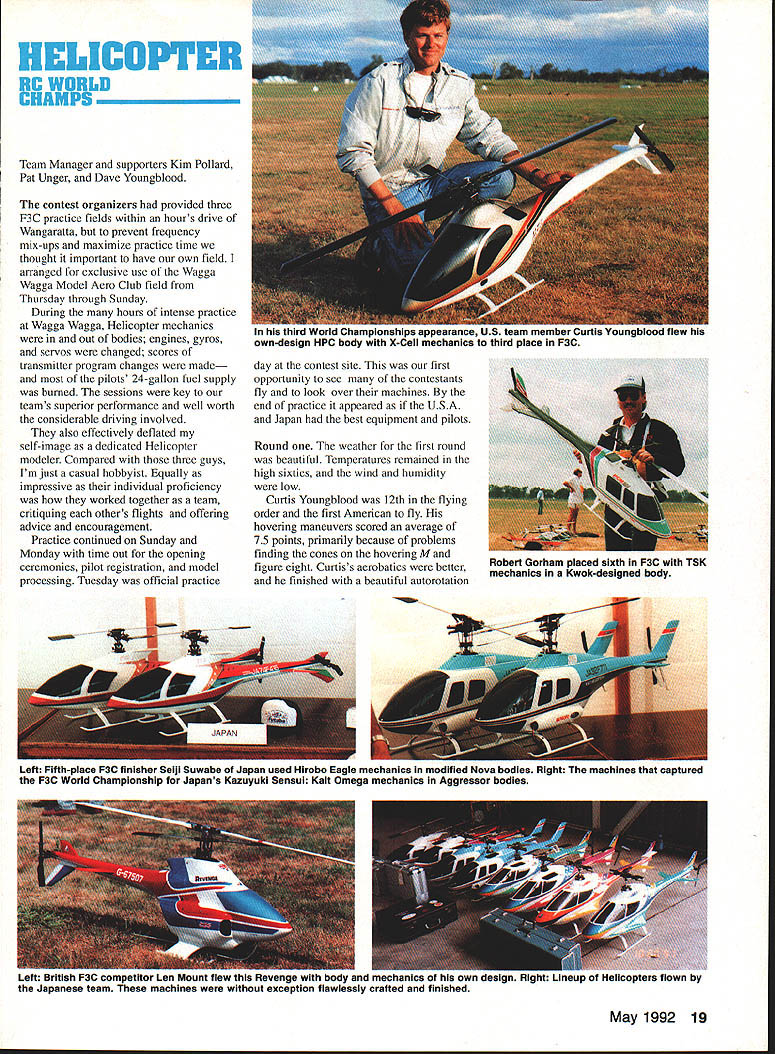
The US team wins the FAI World Helicopter Championship in Australia. The winning trio — Rob Gorham, Curtis Youngblood, and Wayne Mann — represents the apex of competitive RC helicopter flying. Curtis Youngblood begins his legendary career; he will become one of the most decorated 3D pilots of all time and found his own company producing specialty performance products including tail blades and 3D components. Scale models continue to dominate formal competitions at the international level.
Faced with prohibitive production costs from their commitment to 100% in-house US manufacturing, GMP ceases trading in 1990. The IP is sold off, eventually influencing models like the PHI Tornado 3D. Early GMP helicopters — the Cricket, Competitor, and Cobra — are today universally regarded as irreplaceable pieces of RC aviation history. GMP's less-known legacy: developing large 1/5th-scale target drones for the US Army, a remarkable chapter in American RC history.
The 1990s saw heading-hold gyros transform tail control, Thunder Tiger's Raptor redefine the mid-market, LiPo batteries make electric flight practical, and brushless motors quietly build toward an electric takeover. By 2003, Align's T-Rex would detonate the hobby.
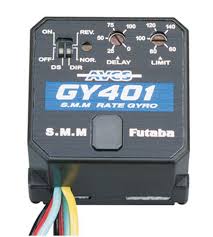
Piezoelectric heading-hold (AVCS — Angular Vector Control System) gyros become commercially available, transforming tail control. Previously, flying required constant rudder input to fight engine torque. Heading-hold gyros automatically maintain heading unless commanded, dramatically reducing the skill floor for hovering and enabling 3D maneuvers. Futaba's GY series becomes enormously influential. JR, Futaba, and others drive the heading-hold revolution throughout the decade, making the RC helicopter hobby accessible to a far broader audience.
Hirobo introduces the Tsurugi, featuring push-pull cyclic servos for precise control, a pre-built rotor head with thrust bearings, and a design built to grow with a pilot from first hover to advanced aerobatics. The Shuttle series continues through ZTS, Challenge, and ZXX variants — its commercial life will extend well into the 2000s, a testament to Hirobo's foundational engineering. The Sceadu series (30/50 sizes, later the Sceadu Evolution) follows, bridging trainer and performance markets.
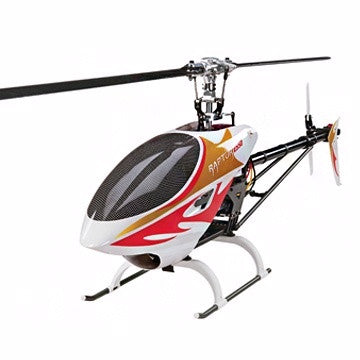
Taiwan's Thunder Tiger Corporation releases the Raptor 30 and 50, designed in collaboration with Mr. Taya — the first F3C Helicopter World Champion. In the upcoming years, the Raptor delivers exceptional engineering at mainstream-accessible prices, with a constant-drive tail system supporting all classes of autorotation. The Bell-Hiller mixing head provides symmetrical cyclic control for positive 3D performance. The Raptor line grows to include the Raptor 60, 90, Titan X50, Mini Titan, and electric Raptor E700 / E720 variants, becoming one of the best-selling helicopter families in hobby history. Thunder Tiger also expands into scale bodies and accessories for the Raptor platform.
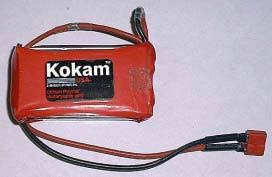
Lithium Polymer (LiPo) batteries become commercially available for RC use. Compared to NiMH and NiCd packs, LiPo cells deliver dramatically higher energy density, lower weight, and high continuous discharge rates (C-rating). Sustained electric flight in larger RC helicopters becomes feasible for the first time. Purpose-built LiPo chargers and battery management technology from Hitec, iCharger, Junsi, and others rapidly follow. LiPo will be the enabling factor for the electric helicopter explosion Align triggers in 2003.
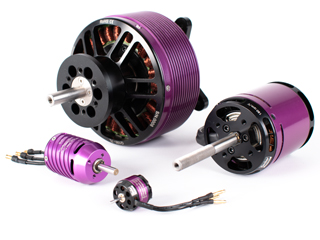
Brushless outrunner motors become commercially viable for RC aircraft, delivering massive efficiency gains over brushed motors. Kontronik (Germany), Hacker Motor, and later Scorpion Motor Systems develop high-performance motors purpose-built for RC helicopters. ESCs with integral governor modes — maintaining precise rotor RPM under varying load — become available. Kontronik's JIVE series becomes an industry benchmark for reliability, governor performance, and telemetry integration. The stage is set for Align's electric revolution.
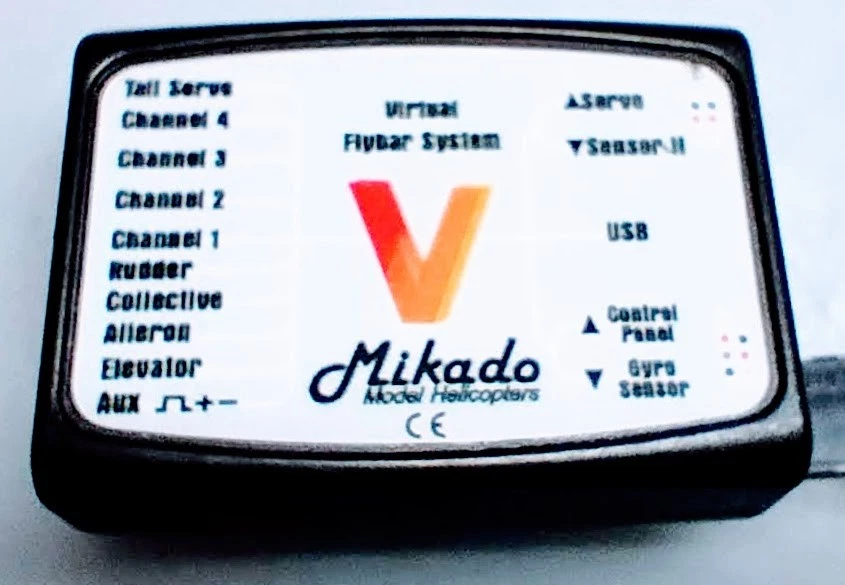
The system that becomes the VBar flybarless controller begins as a private project by Ulrich Röhr in 2001 — born from the idea of electronically replicating the function of the mechanical flybar on multi-bladed rotor heads where no flybar was practical. Its effectiveness at replacing the stabilizing function of the flybar becomes undeniable. Mikado will take over manufacturing and distribution, making VBar the gold standard for competitive FBL performance in the years ahead.
Align's T-Rex 450 electrified the market. Spektrum killed the frequency peg board forever. Flybarless systems from Mikado, BeastX, and MSH replaced the mechanical flybar. By 2011, the RC helicopter was an electronically sophisticated machine that would have been unrecognizable to pilots of 1985.
Taiwan-based Align Corporation (founded 1980, originally a precision parts manufacturer supplying OEM products to Hitachi and Toshiba) releases the T-Rex 450X HDE in 2003. The transformative T-Rex 450XL CCPM follows in 2004 — an affordable, robust, highly capable electric helicopter that destroys the assumption that electric helis must be underpowered or fragile. It becomes the gold standard for the micro and mini class worldwide. Align's complete-ecosystem strategy (motors, ESCs, servos, blades, airframes all from one brand) creates a competitive moat. Align rapidly becomes the largest RC helicopter manufacturer in the world.
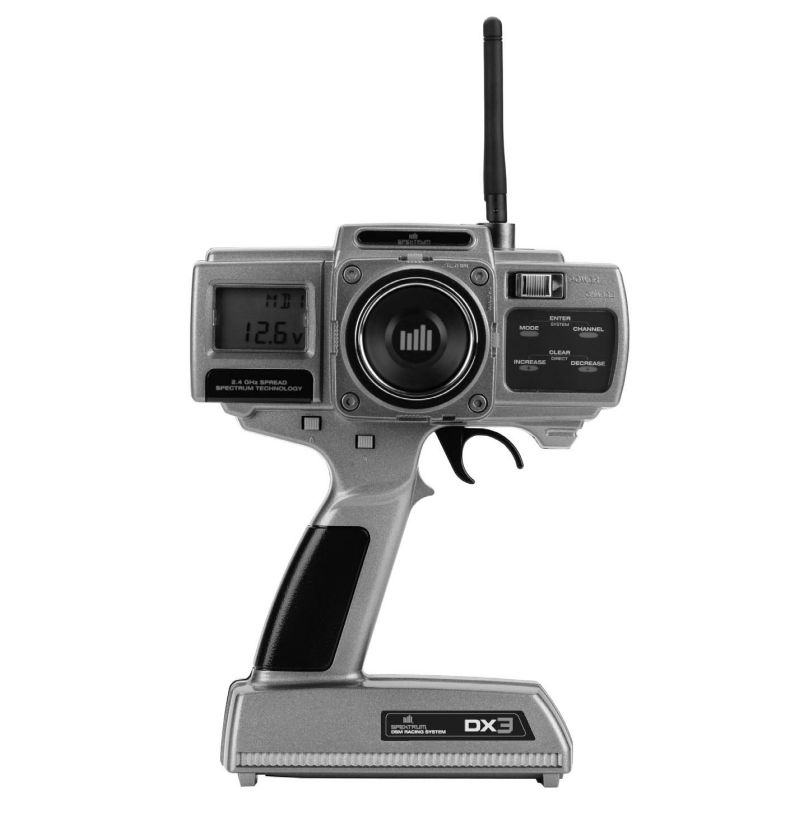
In October 2004, Horizon Hobby unveils Spektrum 2.4GHz DSM Technology at the iHobby Expo in Rosemont, Illinois. Using Direct Sequence Spread Spectrum (DSSS), the system provides a near-interference-proof link. Pilots can switch on and fly without checking a frequency board. The first all-in-one transmitter (DX3) debuts in May 2005. DSM2 adds dual-channel operation; DSMX adds 23-channel frequency-hopping agility, enabling hundreds of transmitters to operate simultaneously. JR licenses the technology. The frequency peg board — a fixture at RC clubs for decades — is obsolete within five years. Futaba, JR, Hitec, and others rapidly follow with their own 2.4GHz systems.
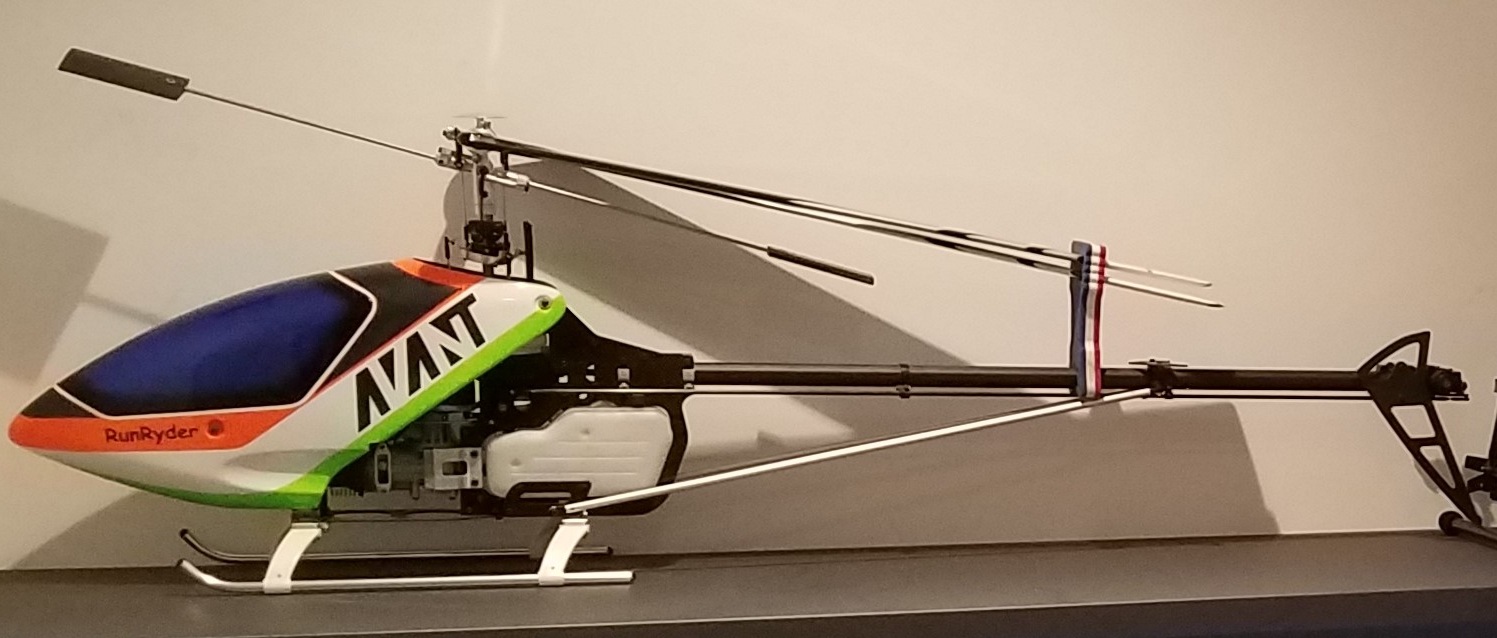
Avant R/C (later known as CarbonXtreme) launched in 2004. The company debuted by offering specialized carbon-fiber conversion kits for popular remote-controlled helicopters (such as the Hirobo Freya) before releasing their flagship 3D helicopter lineup.
The original Avant EFX conversion kit launched in 2004, paving the way for their purpose-built Aurora series of remote-controlled helicopters, which were widely teased and launched into the 3D-aerobatics market in 2006.
The company operated out of Mission Viejo, California, producing several models, including the Aurora 90, e-Aurora, and Mostro, until they ceased operations in 2015.If you are looking for information on a specific model, tell me which one (e.g., the Aurora 90 or Mostro), and I can provide you with details about its release year, specs, or parts compatibility.
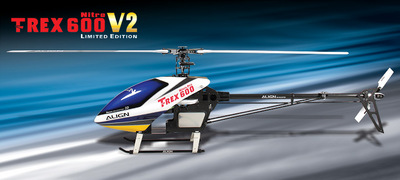
Following the 450's global success, Align expands upward with the T-Rex 600 and T-Rex 500, bringing the same reliability and ecosystem to larger sizes. Competition pilots begin demonstrating what electric power can achieve at scale. The T-Rex 700 further extends the line into the large 700-class nitro/electric competition market.
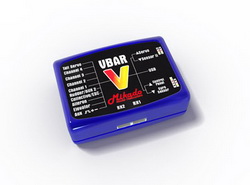
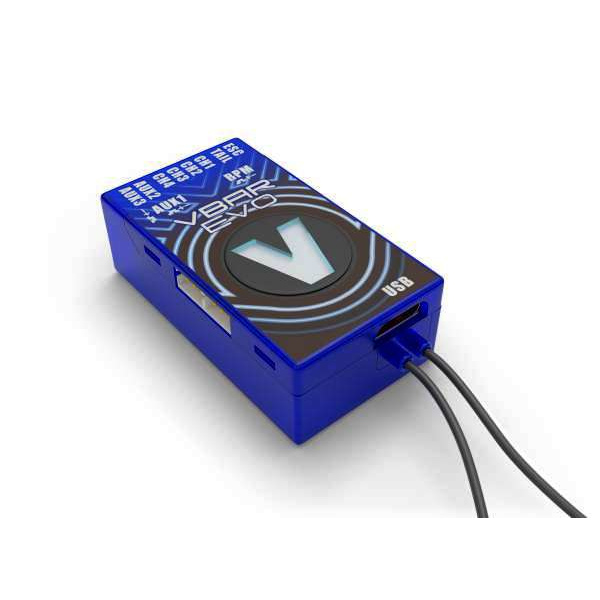
Mikado brings the VBar to commercial production. The VBar Mini is the world's smallest 3-axis virtual flybar system at launch, fitting any small helicopter. It quickly demonstrates that electronic FBL control dramatically improves flight performance over mechanical flybars — faster response, cleaner 3D, more precise heading hold. Mikado simultaneously releases the Logo 600, one of the most respected precision competition RC helicopters of the era. The VBar becomes the gold standard for competitive flybarless performance, setting a benchmark all subsequent systems are measured against.
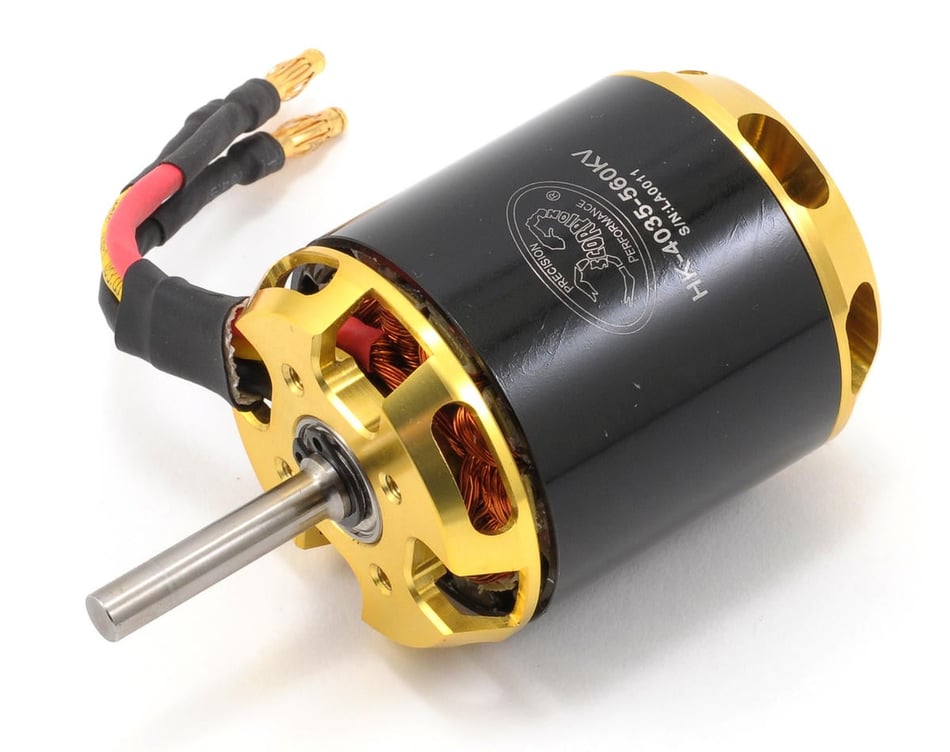
Scorpion Power System was founded in 1987 manufacturing glow plugs, but officially revolutionized the RC helicopter space by launching their flagship HK-series brushless motors in 2007. This product release established the brand as a gold standard in high-performance RC aviation.
History of Scorpion Helicopter Motors
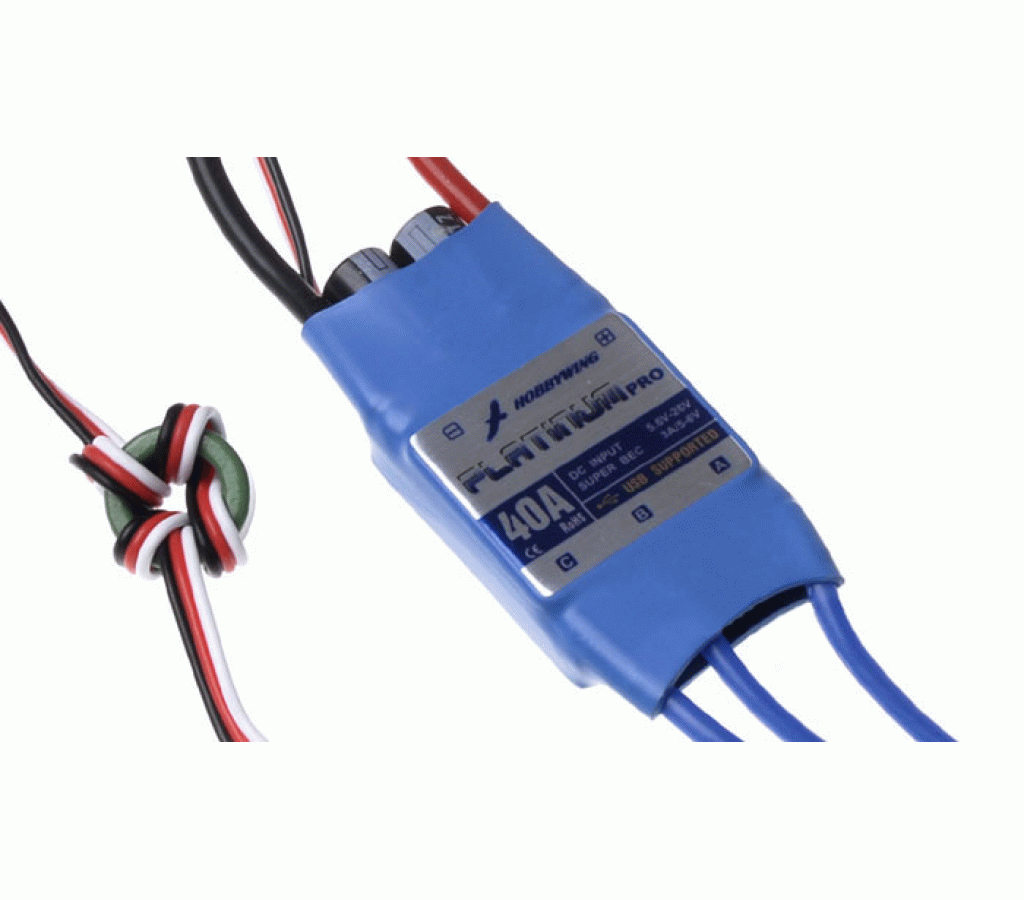
Hobbywing’s entry into the RC helicopter market began as a natural extension of their expertise in developing brushless Electronic Speed Controllers (ESCs) and motors. Originally founded in 2005 in Shenzhen, China, the company started as a manufacturer of brushless power systems for drones and various remote-controlled models.
Their journey into RC helicopters specifically was driven by the hobby-wide shift from nitro (fuel) power to high-performance electric power. As electric motors and batteries became capable of handling the aggressive demands of 3D helicopter aerobatics, Hobbywing recognized the need for specialized speed controllers that could provide incredibly precise head-speed control, reliable "soft start" functions, and high-voltage capabilities.
Hobbywing successfully entered the helicopter space by developing ESCs that integrated advanced, 32-bit processors and specialized governor algorithms. These components were critical for helicopter pilots who needed to maintain a constant rotor RPM, regardless of how much collective pitch (load) was being applied to the blades.
To achieve this, Hobbywing worked closely with competitive RC helicopter pilots and testers to refine their "Platinum" series ESCs. These speed controllers were specifically designed for rotary-wing aircraft, featuring:
Today, Hobbywing is widely considered a leading player in the RC aircraft space, and their ESCs are standard go-to choices for both kit builders and major heli brands like Align.
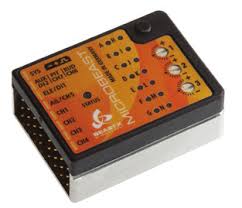
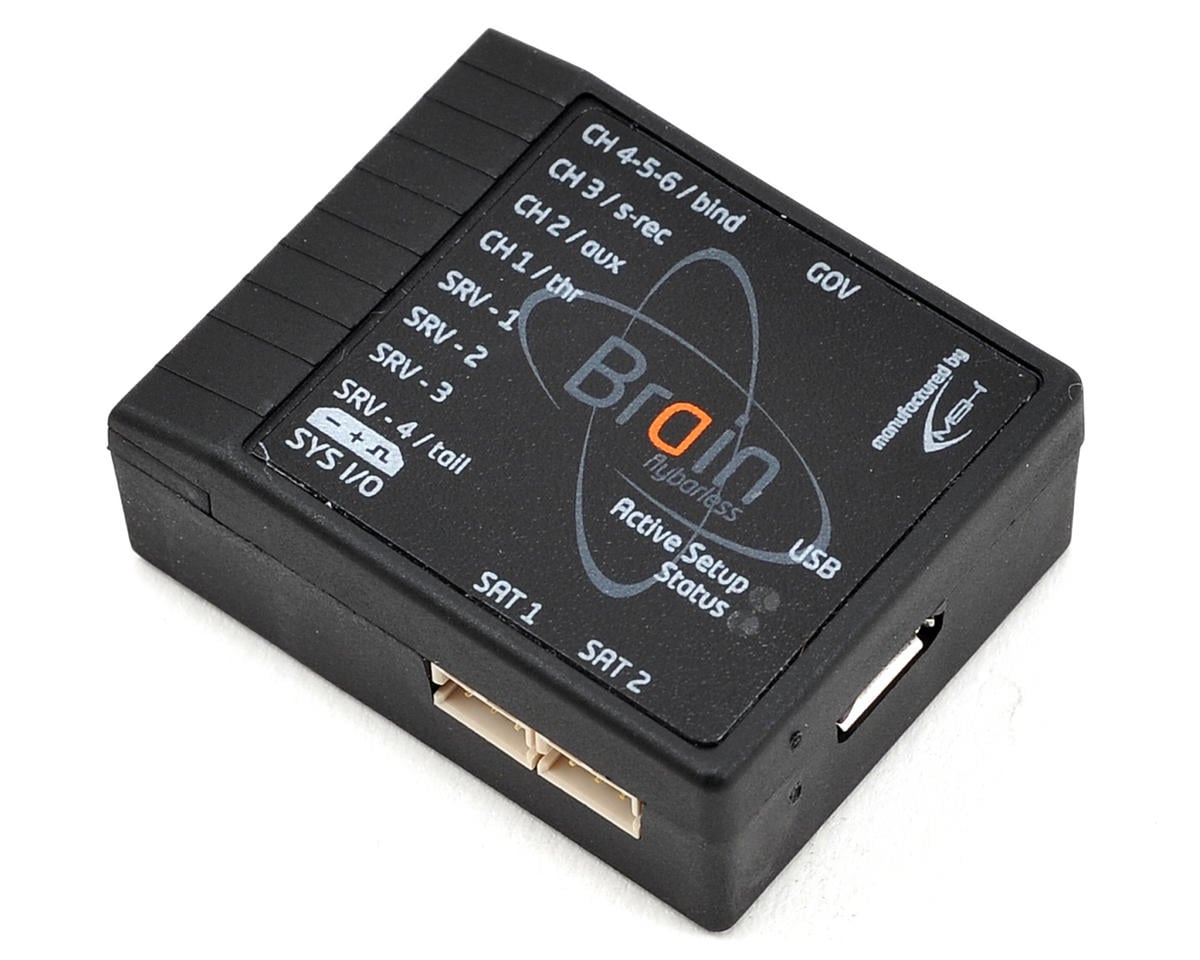
BeastX (Germany) releases the MicroBeast, targeting the mainstream market with an accessible setup wizard and competitive price point. The MicroBeast, MicroBeast Plus, and MicroBeast Ultra bring FBL to hundreds of thousands of pilots. The mechanical flybar begins its decade-long decline toward obsolescence. MSH Electronics (Czech Republic) develops the iKON and later Brain / Brain2 controllers, completing a competitive triad with VBar and BeastX. The resulting FBL "wars" of 2008–2014 drive rapid development across all platforms — a rare case of fierce competition producing clear wins for end users.
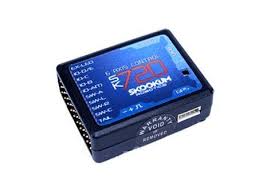
Skookum Robotics (Canada) enters with the SK-360 and later SK-720, notable for advanced governor modes, rich telemetry, and open documentation. The SK-720 develops a strong following among technical pilots and scale fliers who value precision and data logging. Skookum represents the vanguard of telemetry integration in FBL well before it becomes an industry standard.
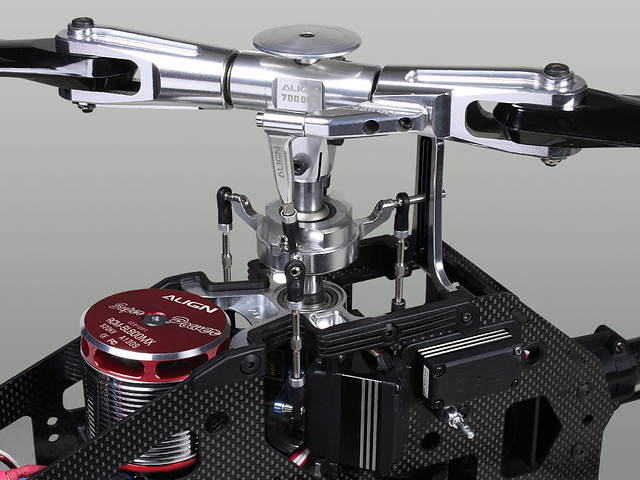
Align introduces DFC (Direct Flight Control) rotor heads — a redesigned geometry eliminating Bell mixer paddles and connecting directly to the FBL swashplate. DFC reduces parts count, increases cyclic response agility, and enables faster, more precise 3D aerobatics. The T-Rex 450 Pro DFC, 550E Pro DFC, and 700 DFC variants bring DFC to every size class. The concept is quickly adopted or imitated across the industry. Align also begins its commercial UAV and agricultural drone program, leveraging its electric flight expertise beyond the hobby market.
SAB Goblin reinvented what an RC helicopter frame could look like. OMP Hobby brought precision at accessible prices. Goosky and XL Power raised performance ceilings. The hobby went fully flybarless, fully electric, and fully global — with manufacturers from Taiwan, Italy, China, and the US competing at the highest levels.
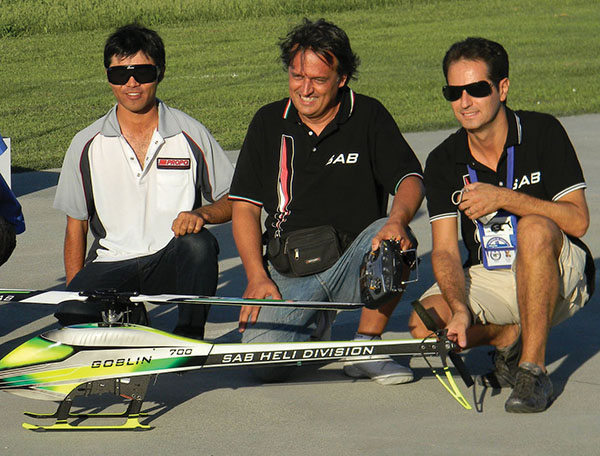
Italian engineer Enrico Bernabei of SAB Heli Division releases the Goblin 700 — a complete rethinking of RC helicopter design. Motivated by a desire to spend less time on maintenance and more time flying, Bernabei prioritizes simplicity: as few parts as possible, easy to access, easy to replace. The result is radical: continuous-curve carbon fiber bodywork flowing into a rectangular monocoque tailboom from a female mold (no hidden aluminum tube), a toothed belt tail drive, and an aluminum drivetrain platform reusable across a full size family. Between 2012 and 2019, Enrico releases the Goblin 630, 570, 500, 420, and 380. Roughly 10,000 Goblins remain flying as of 2021. Written history documented by James Wang in Model Aviation magazine.
The most legendary IRCHA Jamboree varies depending on what you value most. However, the years universally regarded as monumental milestones stand out for distinct reasons.2012: The Peak Attendance RecordWidely celebrated as a historical high point, 2012 remains deeply memorable because it shattered IRCHA's all-time registration records. With 1,049 registered pilots, it cemented the event's status as the ultimate gathering for RC helicopter enthusiasts globally.
Before flybarless technology, RC helicopters used complex mechanical flybars to stabilize the helicopter in flight. When FBL systems first emerged in the hobby, they were strictly used for stabilization. The birth of the Brain system marked a major paradigm shift.
The UK's 3D Masters—the world-renowned radio-controlled (RC) helicopter aerobatics competition—faded as the logistical and financial costs of organizing the event became too large. Because RC helicopters transitioned into an incredibly niche and specialized hobby, securing sufficient sponsor and spectator funding to maintain the high standards became unsustainable.
The key dates and milestones tracking the timeline of the UK 3D Masters and its successors span several decades:
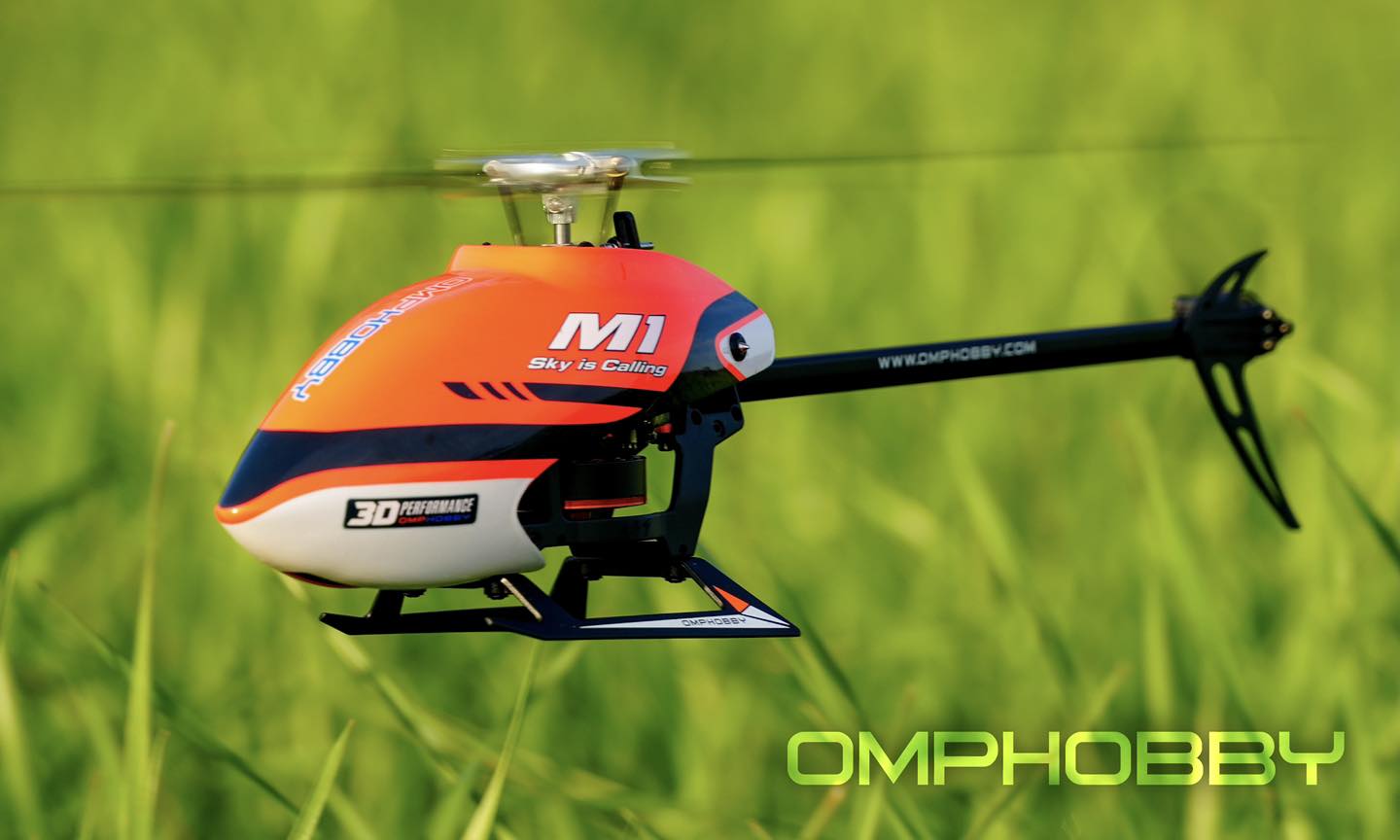
OMP Hobby (China) launches the M1 and M2 series — compact helicopters delivering exceptional engineering quality at price points that challenge far more expensive European and Taiwanese machines. The OMP M2 becomes widely used for both sport flying and competition. OMP's commitment to in-house quality control distinguishes it from many Chinese competitors. The product line grows steadily: M4, M5, M6, M7, each bringing more capability while preserving OMP's value-for-money positioning.
Lynx Heli Innovations was founded in 2009 by Luca Invernizzi, a passionate Italian RC pilot and designer. The brand gained a massive following by producing premium, high-quality CNC aluminum and carbon fiber upgrades for existing micro helicopters (such as those from Blade).
The Start and Rise
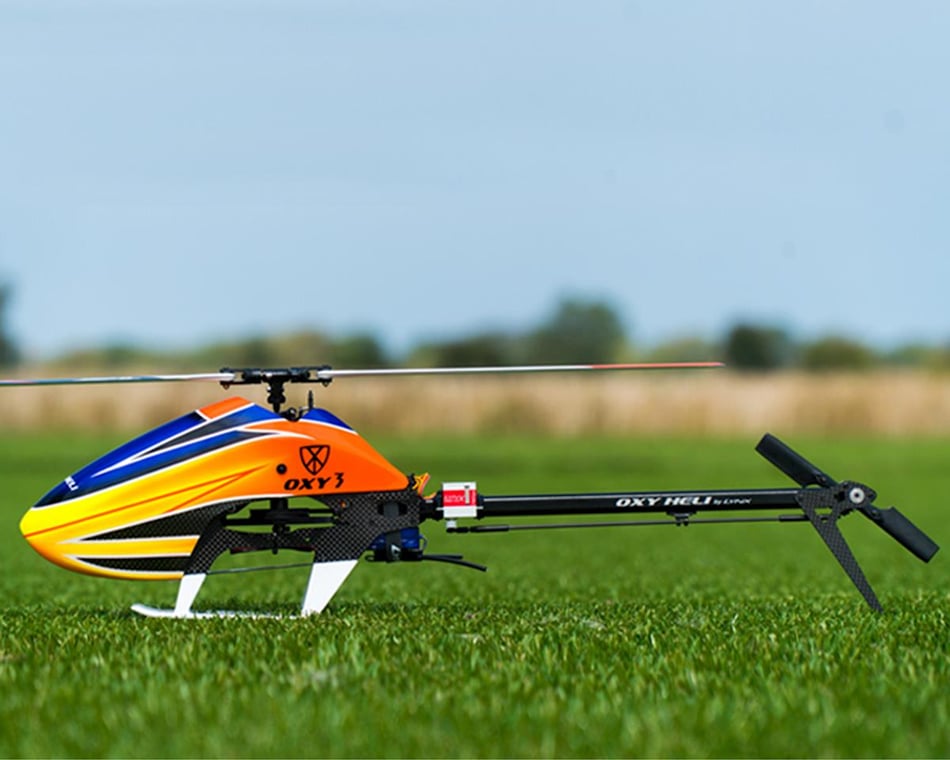
In 2014, capitalizing on their massive aftermarket success and design expertise, Lynx launched Oxy Helicopters, a dedicated line of high-performance RC helicopters.
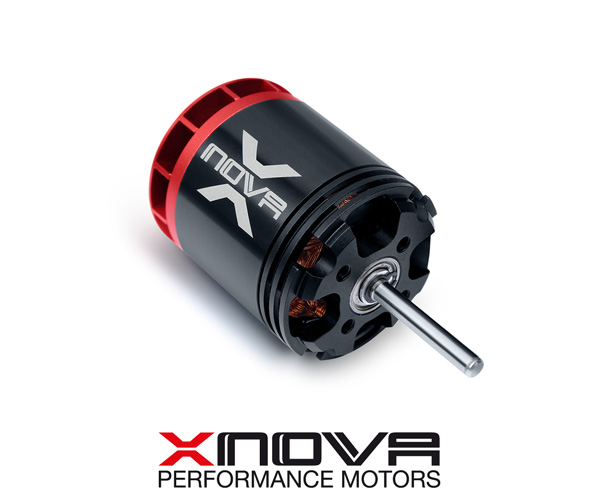
Xnova Motors has focused heavily on RC helicopters since its inception in 2014. The company entered the radio-controlled market specifically to engineer premium, hand-wound brushless motors for extreme 3D, F3C, and scale helicopters.
Core Timeline & Product Focus
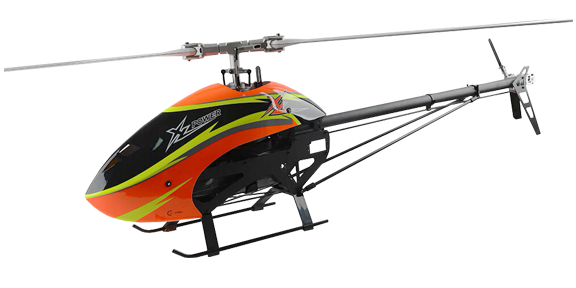
XL Power emerges with the Specter 700 and related models, attracting competition pilots with aggressive engineering. XL Power also produces the Nimbus 550 (nitro capable), the Nimbus Nitro, and the ultra-compact Stratos 200 micro helicopter that later runs RotorFlight. Known for quality machined components, XL Power develops a following among technical pilots who push machines to their absolute limits.
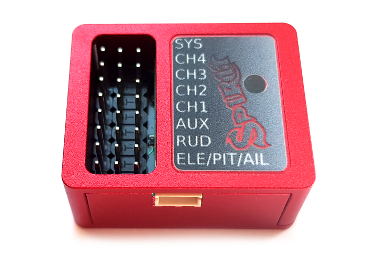
The original Spirit Flybarless (FBL) system launched in January 2015. Developed by a Czech Republic-based company, the system was designed to stabilize remote-controlled (RC) helicopters and featured advanced capabilities like vibration immunity, electronic paddle simulation, and built-in stabilization.
The Evolution of the Spirit Line
Since the original release, the Spirit System ecosystem has significantly expanded to include several upgraded variants:
Mikado releases the VBar NEO, successor to both VBar Mini and Silverline. The NEO features dual multi-axis sensor arrays for vibration resistance through sensor fusion, 9 servo outputs, integrated USB, telemetry ports, and a hardened power supply. The NEO becomes a reference-class FBL system at the top levels of F3C and 3D competition. Mikado's VBar Control (VBC) transmitter — with touchscreen, App Store functionality, and full VBar integration — represents a uniquely integrated radio/FBL ecosystem that no other manufacturer attempts to match.
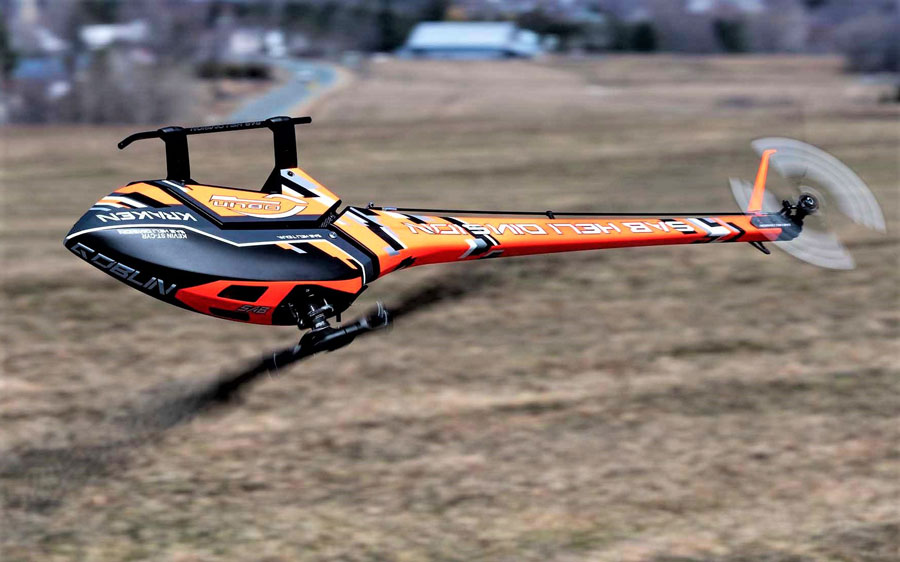
Enrico Bernabei releases the Kraken 700, his 30th helicopter design and the successor to the original Goblin line. The Kraken features a sealed greased second-stage gearbox and numerous refinements. The Kraken 580 follows in summer 2020.
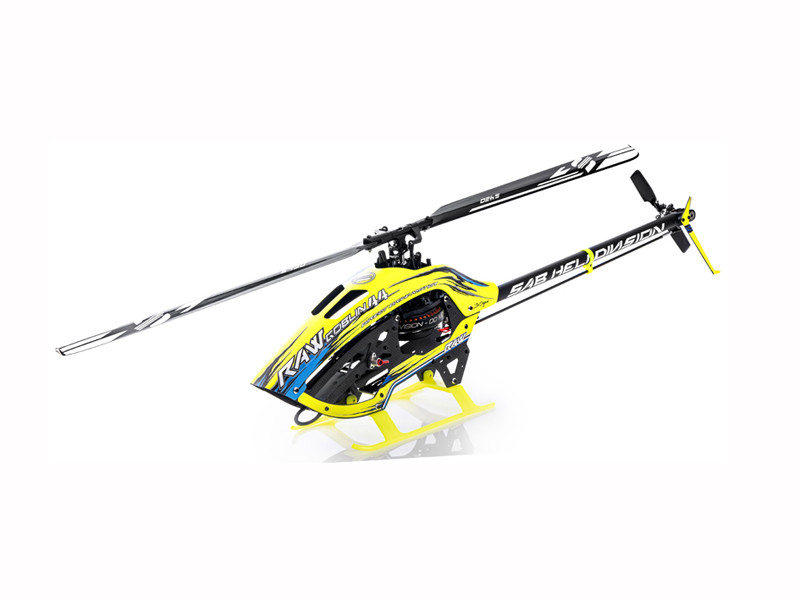
The Tron series (Tron 5.5, Tron 7.0 DNAMIC / Elite / Advance, Tron Gemini/Orion) launches alongside, targeting competition with a distinct design philosophy. SAB simultaneously maintains the IL Goblin and Raw Goblin lines for pilots devoted to the original platform's character.
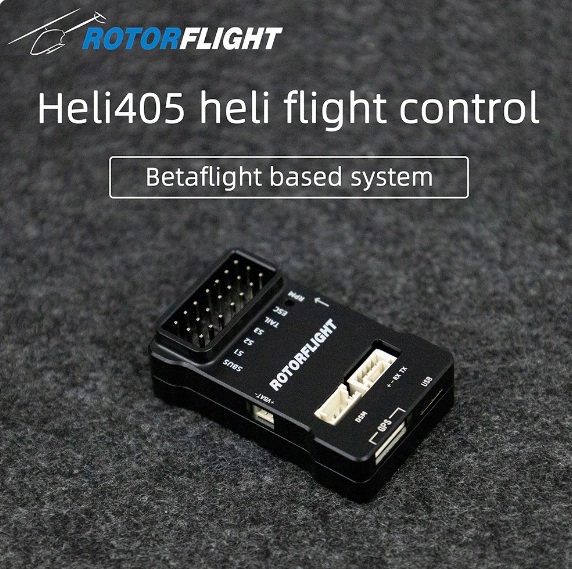
RotorFlight changed the game. Born from BetaFlight's drone racing code, adapted for RC helicopters, it brought community-driven development, blackbox logging, Lua radio integration, and purpose-built hardware from RadioMaster, FrSky, ELRS, Edge TX, and others. The flybarless controller is no longer a closed black box.
The "fall" or severe downsizing of Lynx and Oxy Heli did not happen overnight, nor was it due to poor quality. Instead, it was a mix of a severe personal health crisis, shifting market dynamics, and global supply chain issues.
Current Status
By 2024, the Oxy Helicopter lineup was largely discontinued. Lynx Heli Innovations is no longer manufacturing or widely stocking the beloved Oxy 2, Oxy 3, or Oxy 5 kits, and remaining kits quickly sold out at retailers like Helidirect. While the Lynx website is still online and some legacy parts can still be sourced, the once-bustling Oxy Heli development and manufacturing pipeline has effectively closed
RotorFlight emerges as a fork of BetaFlight 4.2 adapted for single-rotor RC helicopters. The core insight: STM32 microcontrollers and IMU sensors used by the FPV drone world can deliver world-class helicopter flight control — with hundreds of open-source developers contributing rather than a handful of proprietary engineers. First stable releases match and in areas exceed established proprietary FBL systems. Key features from launch: 3-axis PID control, integrated governor, blackbox logging, rescue mode, vibration filters, and support for virtually every radio protocol including ELRS.
Read RCFlightPath's full article on RotorFlight ...
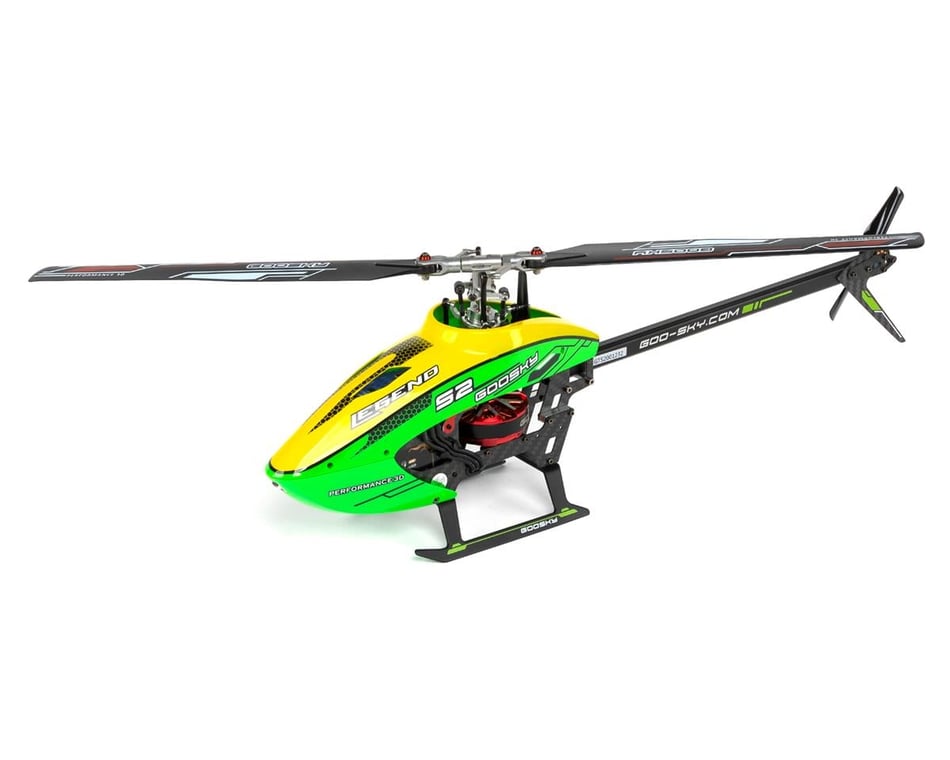
Since it's founding in 2021, Goosky (China) launches its RS helicopter series, rapidly building a reputation for excellent out-of-box flight performance and straightforward setup. The RS4 and RS5 become popular mid-class choices. Goosky's modern, quality-controlled manufacturing produces machines competitive with European and Taiwanese designs at significantly lower cost. The later S2 series (S2 Max, S2 Ultra) integrates RotorFlight as standard equipment. The RS7 Ultra emerges as a premier 700-class 3D competition helicopter built in collaboration with world-class pilots.
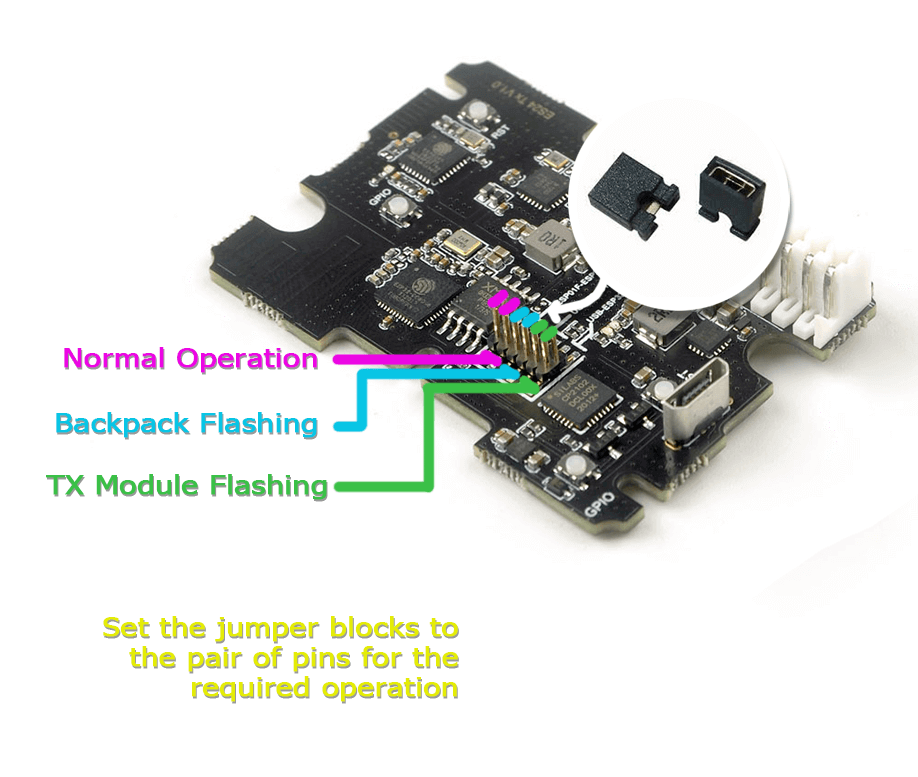
ExpressLRS (ELRS) achieves mass adoption in RC helicopters, aided by RotorFlight integration. Operating on 2.4GHz and 900MHz, ELRS offers sub-millisecond latency, kilometer-range links, and hardware from RadioMaster, Happymodel, BetaFPV at unprecedented low cost. The combination of ELRS + RotorFlight creates a fully open-source, high-performance control chain at a fraction of proprietary alternative costs — analogous to what the open-source software movement did for computing.
RotorFlight 2.0 releases with major improvements to governor, PID algorithms, rescue mode, and the configurator. The first wave of purpose-built hardware arrives:
STM32F722, ICM-42688-P, 128MB blackbox, CNC aluminum case. Designed from the ground up to the RF2.0 spec over 12 months with the RotorFlight dev team.
STM32F722, BMI270, 128MB blackbox, built-in ELRS diversity receiver. No external receiver needed — cleanest possible wiring.
STM32G474, ICM-42688-P. Two bare-board sizes (38mm and 30mm) for pilots who prefer to handle vibration mounting themselves.
Read RCFlightPath's full article on RotorFlight ...
The SAB Heli Division iLGoblin line of RC helicopters has rolled out several models over time, with the main iLGoblin Pro 520 officially launching in late July 2024 after pre-orders opened in mid-July.
SAB subsequently expanded the iLGoblin lineup with several other models:
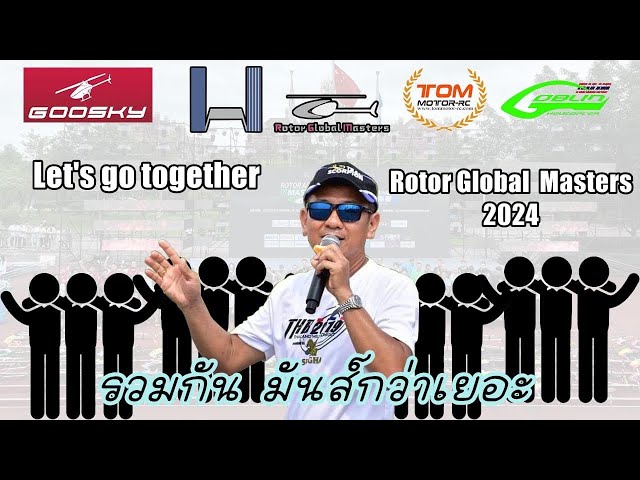
August 23-25 The Rotor Global Masters (RGM) is a premier international RC (Radio Controlled) helicopter aerobatics competition. Hosted annually in Chengdu, China, the event draws top-tier professional pilots from around the world to compete in intense 3D and freestyle maneuvers.
Goosky Innovation was a headline, first-class sponsor of the event, where their factory pilots prominently debuted and flew the flagship Goosky RS7 700-class 3D aerobatic helicopter.
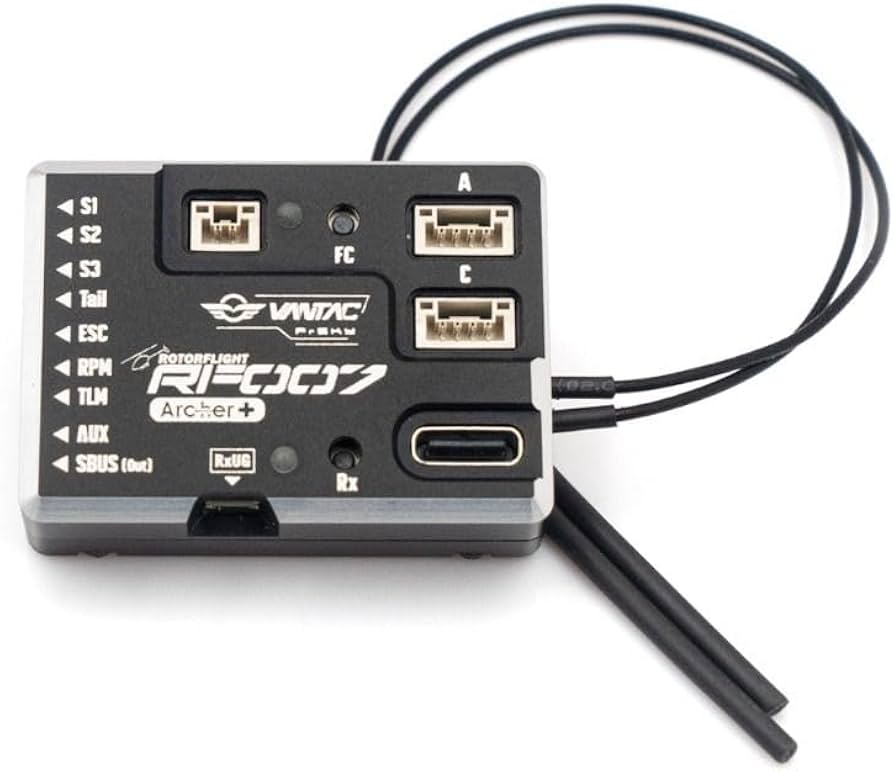
FrSky enters with the VANTAC RF007: RotorFlight 2.x on STM32F722 with a built-in FrSky receiver in three variants (Archer+, Twin, Tandem 2.4+900MHz). Native ETHOS Lua script integration enables real-time PID tuning from FrSky X20/X20S/X18S transmitters. The RF007 immediately attracts FrSky's large installed user base. Also in 2024: Goosky S2 Ultra ships with the Goosky F4MINI RotorFlight controller as factory standard — the first mass-market helicopter to ship with open-source FBL firmware from the factory.
The Global 3D RC helicopter competition in the Netherlands was unfortunately cancelled. Organizers were forced to call off the event due to a severe shortfall in sponsor commitments. Because the competition requires extensive logistical planning and funding, and relies heavily on spectator revenue, organizers could not make it financially viable.While the historic Netherlands event was put on hold, the competition has pivoted to the Asian market. Organizers now host Global 3D Asia, which recently took place in Zhuhai, Guangdong, China.Stay updated on future events and rule announcements through the official Global3D
The official announcement cancelling Global 3D 2025 in Venlo, Netherlands, was made on March 28, 2025.
Organizers shared the news on that day because they had reached the "Point of No Return"—the critical deadline before registering pilots began booking non-refundable flights and accommodations. At that stage, they had to pull the plug due to failing to secure enough financial support from corporate sponsors to make the costly event viable.
Following that cancellation, the organizing committee moved quickly to pivot to Asia, officially locking in and announcing the Global 3D ASIA replacement schedule later that year on December 28, 2025
RotorFlight 2.2 releases, refining control loops and expanding the configurator. New hardware defines the integrated-receiver era:
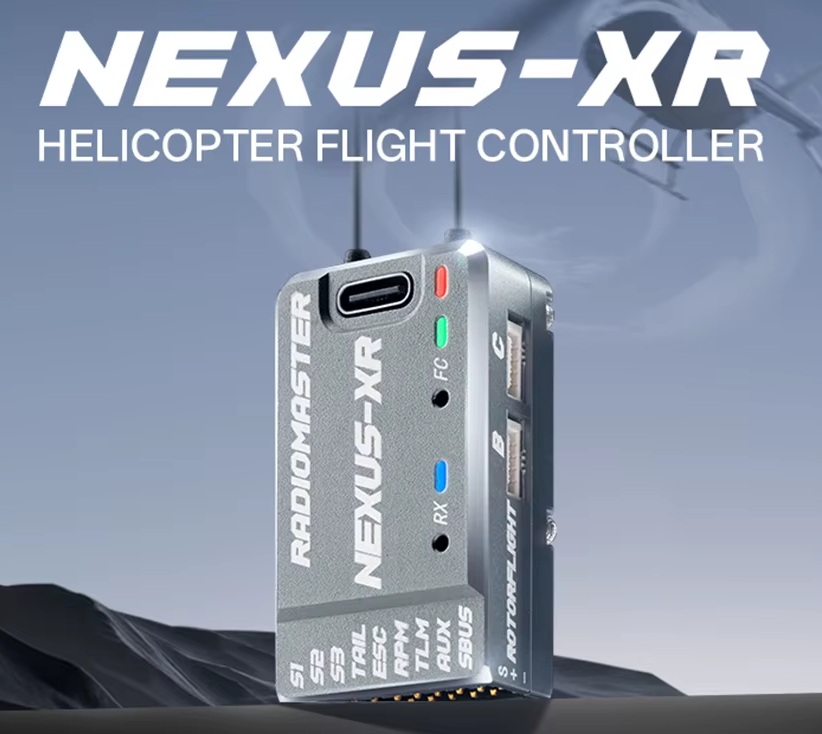
Evolution of the original NEXUS: 256MB blackbox, 12V servo rail, additional PWM outputs, 3.6–70V external voltage input. Five case colors. 20.6g.
NEXUS-X with integrated RP4TD-M ELRS true diversity receiver (dual Semtech SX1281 chips). No external receiver needed. 256MB blackbox. 24.1g. The cleanest all-in-one FBL solution available.
Hirobo Limited (based in Hiroshima, Japan) announced the phase-out of its historic Radio Controlled (RC) model helicopter operations in mid-2025, with final factory closures and winding down completed in March 2026.
The decline and closure of this division happened in several stages:
With RotorFlight 2.x actively developing GPS position hold, return-to-home, and advanced rescue, the RC helicopter is crossing into territory previously reserved for commercial UAVs. Align continues its agricultural drone and commercial UAV programs. Thunder Tiger's TTROBOTIX division supplies UAV and ROV products to enterprise clients. The boundary between high-performance sport helicopter and autonomous aerial platform continues to dissolve — and the open-source community is writing the code that will define what comes next.
The 2nd Global 3D Asia 2026 tournament concluded on March 22, 2026, in Zhuhai, Guangdong, China. The event featured a sprawling dedicated sponsor zone that doubled as a massive industry expo.
The XLPower Stratos 200 is an advanced micro RC helicopter engineered to deliver the feel, response, and precision of a full-size 700-class machine. It is designed to bridge the gap between "toy-grade" micros and large professional helicopters.
The XLPower Stratos 700 is a premier, competition-grade 3D RC helicopter built for ultimate rigidity and precision. Positioned as a major step up from the popular Specter, it has garnered significant attention following championship flights by pilots like Kenny Ko